Flat Roof Systems Engineered for Drainage
TPO roofing in Bothell for low-slope applications on modern residential and commercial buildings
Flat and low-slope roofs on contemporary home designs and commercial structures require membrane systems that prevent water pooling in Pacific Northwest rainfall. Sky Roofing Renovations LLC installs TPO single-ply roofing in Bothell by heat-welding seams to create watertight bonds and designing drainage paths that direct water toward scuppers or internal drains. Modern architecture increasingly includes flat roof sections for outdoor living spaces or simplified building profiles, creating demand for membrane solutions that outperform traditional built-up roofing in wet climates.
The installation process involves verifying deck slope to ensure positive drainage, applying insulation layers that improve energy performance, and mechanically fastening membrane sheets before welding seams with hot air equipment. Proper drainage design prevents the standing water that degrades membrane materials and creates leak vulnerability where water pressure finds weak points. Licensed contractors evaluate whether your existing structure provides adequate slope or requires tapered insulation to achieve necessary drainage angles.
Schedule a property evaluation to assess your flat roof drainage and discuss TPO system design for your building.
What Proper Membrane Installation Requires
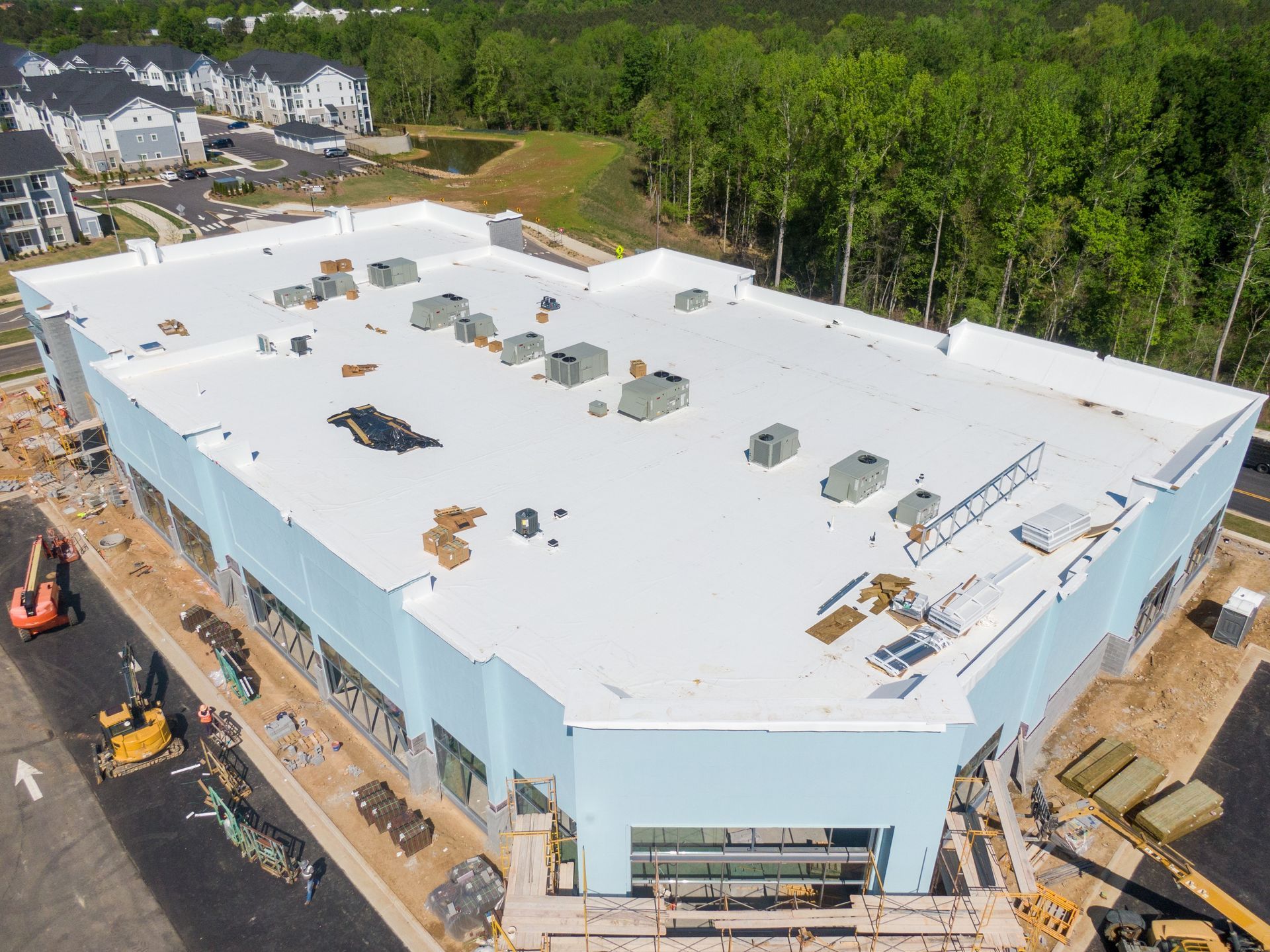
Heat-welded seams form molecular bonds between membrane sheets that create stronger connections than adhesive-based systems, reducing failure risk at overlap points where water pressure concentrates. The white or light-colored TPO surface reflects solar radiation, lowering cooling costs compared to dark built-up roofing that absorbs heat. Installation includes flashing integration at parapet walls, equipment curbs, and penetrations where roof transitions create potential leak paths.
After the system is installed, you see a smooth, uniform surface without the gravel or tar appearance of older flat roof materials. Water flows consistently toward drains during storms rather than pooling in depressions that indicate inadequate slope. The membrane remains flexible in cold weather and resists cracking from freeze-thaw cycles that damage rigid roofing materials. Your building interior stays dry even during sustained rainfall events that test drainage capacity on flat sections.
TPO systems serve both residential properties with modern flat-roof designs and commercial buildings where large uninterrupted surfaces make traditional pitched roofing impractical. The material resists puncture damage better than older rubber membranes and maintains performance characteristics for 20 to 30 years when properly installed with adequate drainage design.
Questions Before Starting Your Project
Property owners considering TPO installation want to understand how the material performs, what the installation involves, and how it compares to alternative flat roof systems.
What makes heat-welded seams superior to glued connections?
Hot air welding melts membrane edges together to form continuous material bonds rather than relying on adhesive that can degrade from water exposure or temperature cycling. The welded seams typically outlast the surrounding membrane material.
How does TPO handle Bothell's drainage demands?
Proper installation includes slope verification or tapered insulation application to maintain positive drainage toward collection points, preventing the standing water that causes premature membrane failure in flat roof systems.
What maintenance does TPO roofing require?
Semi-annual inspections check seam integrity and clear debris from drains, while occasional cleaning removes organic growth. The smooth surface doesn't trap moisture or support moss colonization common to textured roofing materials.
When should I consider TPO versus modified bitumen or EPDM?
TPO offers better reflectivity than dark rubber membranes and superior puncture resistance compared to older systems, making it effective for Pacific Northwest applications where drainage performance and longevity matter more than initial cost savings.
How do you verify proper drainage before installation?
Contractors use levels and water testing to identify low spots where pooling occurs, then design insulation layouts or structural modifications to achieve minimum slope requirements that prevent standing water accumulation.
Sky Roofing Renovations LLC approaches every flat roof project by evaluating your specific drainage conditions and building use requirements rather than applying generic solutions. Licensed and insured contractors with Pacific Northwest experience understand how regional rainfall patterns affect flat roof performance differently than in drier climates. Call (206) 853-1210 to discuss your low-slope roofing needs and arrange a consultation that addresses your building's drainage design.